
.png)
%20(1).png)
.png)
-1.png)
-1.png)
.png)
.png)
.png)
.png)
%20(1).png)
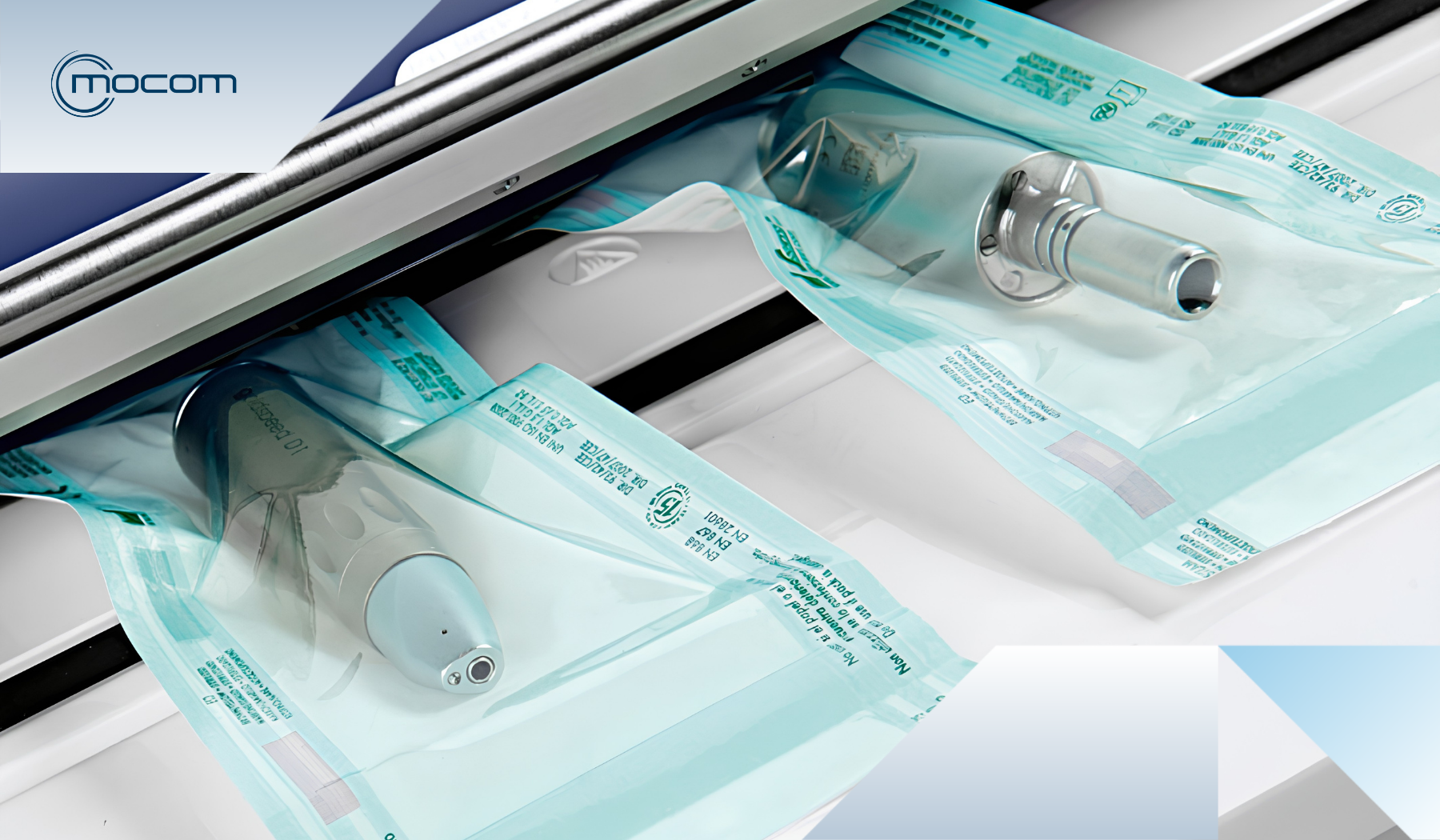
The sterilisation process is complete when the instruments are removed from the autoclave and their condition is approved by the operator. However, the outcome of the entire reprocessing process also depends on the packaging and sealing of the instruments. This crucial step has a direct impact both on the effectiveness of the sterilisation cycle on the instruments and on the maintenance of their sterility once they are stored.
In fact, an imperfect seal can compromise the sterility of the load, exposing patients to the risk of cross-infection and the practice to potential medical-legal liability.
Below, we will analyse best practices for packaging and the most common errors that risk compromising the sterile barrier.
The golden rules of packaging (and mistakes to avoid)
Before the instrument reaches the thermal sealer, it must first be decontaminated, cleaned, rinsed and dried.
| Choice of envelope |
Use only pre-cut rolls or bags that comply with the regulations. The combination of medical-grade paper and polymer film allows steam to penetrate and the item to dry, whilst acting as a complete barrier against microorganisms once the cycle is complete. |
| Handling of sharp instruments | Drills, scissors, probes and other sharp instruments must be protected with suitable silicone caps or gauze. This prevents accidental micro-perforation of the pouch during handling or the pouch contracting during the vacuum phase of the autoclave. |
| Positioning | The hinges on forceps and scissors must be open. Furthermore, it is advisable to insert the handle of the instrument towards the opening side of the pouch, to facilitate its aseptic removal by the operator. |
| Compliance with safety volumes and distances | To avoid overfilling the packaging, the contents must never exceed 75 per cent of the total volume: overfilling the pouch to save time or material is the most common mistake, and if the instrument pulls or stretches the medical paper, the risk of the seal failing in the autoclave increases. When sealing, it is also essential to leave at least 3 cm of empty space between the instrument and the seal line: applying the seal too close to the instrument prevents a proper seal and creates tension on the seal, whilst the correct margin ensures that the plastic film and paper can lie flat and even against each other as they pass through the heat sealer. It is also good practice to leave a margin of approximately 1 cm between the sealed strip and the end of the paper, to allow for easy opening (peeling). |
| Correct loading into the thermal sealer | If the bag is not positioned perpendicular to the sealing bar, or if it is not held taut whilst passing through the sealing machine, this will result in creases and folds forming along the seal. A crease in the seal is, to all intents and purposes, an open tunnel through which microorganisms can penetrate and contaminate the freshly processed load. Guiding the bag whilst keeping it taut with both hands ensures that the paper side and the film side are perfectly aligned and flat. |
| Caution with lubricated instruments | When packaging handpieces and turbines, it is essential to place a gauze pad inside the pouch. This precaution serves to absorb any excess oil, preventing the medical-grade paper from becoming saturated and potentially compromising the effectiveness of the sterilisation process. Furthermore, oil released by the instruments during the sterilisation cycle could adversely affect the steriliser’s performance over time. |
| Temperature and thickness of the sealing strip | To comply with the standards (UNI EN ISO 868-5), the thickness of the heat-sealed strip must be between 6 and 12 mm. If the sealing temperature is too low, a ‘false seal’ is created (the edges come apart easily), whilst if the temperature is too high, it burns the medical paper or melts the polymer excessively, making the envelope brittle and prone to tearing. The solution is to use high-quality heat-sealing machines that electronically and automatically control the parameters: for standard paper/film envelopes, the optimum temperature is usually between 170°C and 200°C (always check the roll manufacturer’s instructions). |
| Visual quality control and integrity of the seal | The integrity of the sterile barrier is non-negotiable. Should the pouch, at the end of the process, show signs of scorching or an irregular and uneven seal, it is essential to discard the pouch and repeat the entire packaging process. Similarly, if you are unsure whether a pouch has been sealed properly and are tempted to carry out a second seal that crosses or partially overlaps the first, this should be avoided: the double heat treatment weakens the materials and risks damaging the seal. The seal must remain a single, continuous and uniform line. |
Why precision at this stage makes all the difference
Paying close attention to the packaging stage means safeguarding the investment made in the disinfection and sterilisation process.
The adoption of strict protocols and the use of state-of-the-art thermal sealers eliminate the risk of human error, protecting both patients and practice staff.
Furthermore, the EN ISO 11607-2 standard requires that the sealing process be validated, to guarantee the reliability and repeatability of the process in terms of its critical parameters, such as temperature, pressure and time. Seal after seal.