
.png)
%20(1).png)
.png)
-1.png)
-1.png)
.png)
.png)
.png)
.png)
%20(1).png)
Every time we sit in the dentist’s chair, we take it for granted that the instruments used are safe and sterile. But what really happens between one patient and the next? And above all, how does a dental practice demonstrate, in a documented and verifiable manner, that all sterilisation processes have been carried out correctly?
The answer lies in an increasingly widespread concept: the traceability of instrument reprocessing and, in particular, of their sterilisation.
Why track and trace? Medical-legal protection
As well as being good practice, the sterilisation of instruments is a legal requirement. In the event of legal disputes, it can mean the difference between a practice that is protected and one that is exposed to serious liability. Documenting every step of the reprocessing procedure – that is, the series of operations that prepare an instrument for clinical use after each patient – provides the practice with tangible protection in the event of a potential incident.
Put simply, having an accurate and detailed record of every sterilisation cycle provides documentary evidence that allows you to defend yourself against any allegations. You must document who initiated the sterilisation process, when, using which equipment and on which instruments.
The 3 levels of traceability
The traceability process is structured across three distinct levels, each of which adds a link to the safety chain. These can be managed either manually (using paper records and handwritten labels) or digitally, using management software and a direct connection to the equipment. Obviously, the latter approach is more streamlined, secure and effective. But what are they?
First level — Autoclave and sterilisation cycle
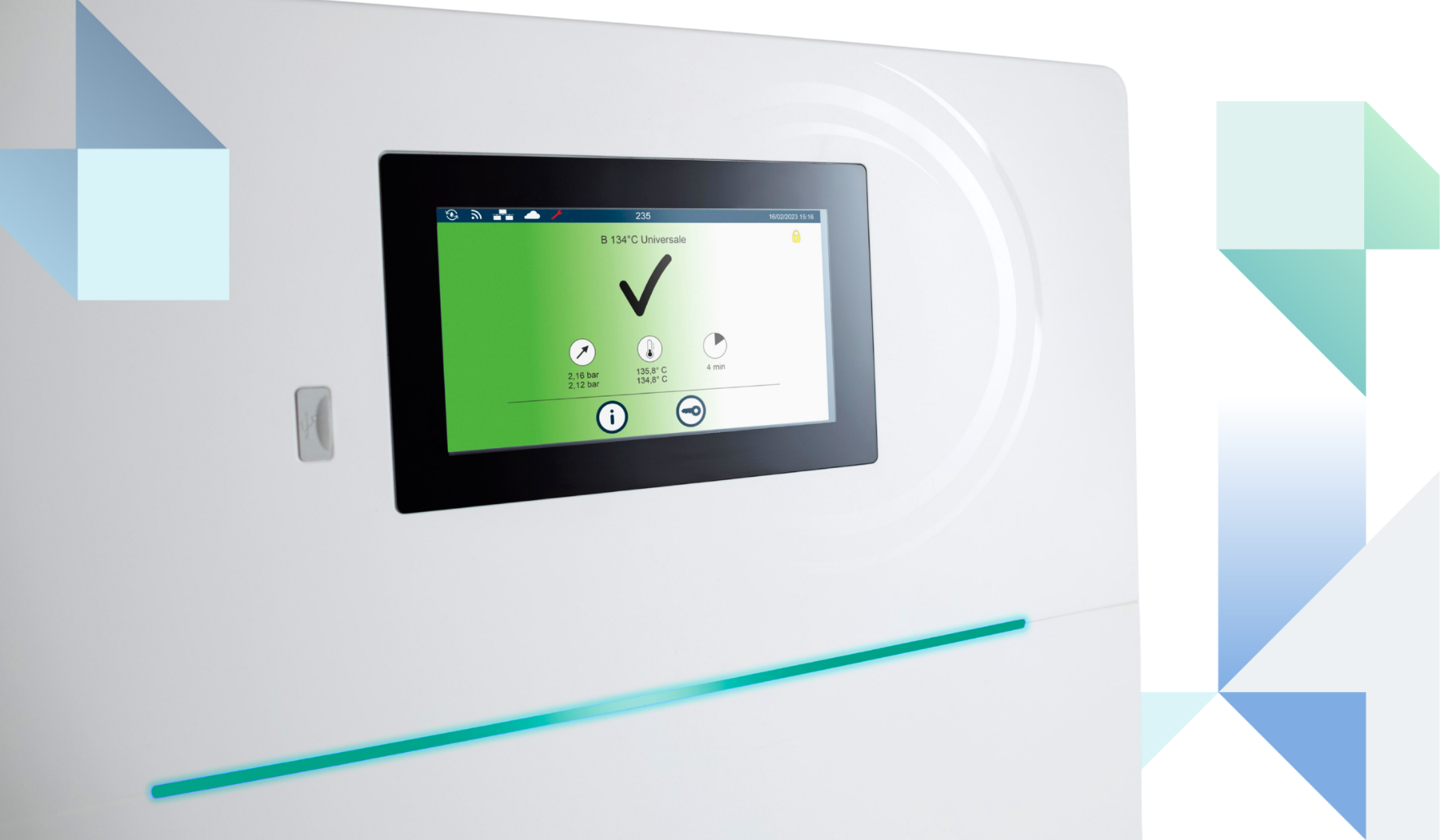
The first level certifies that the autoclave has completed a specific cycle without errors, at a precise date and time, including the names of the operators who started and finished it. In the traditional approach, this information is printed on paper. With digital technology, the report is automatically saved as a PDF, either locally or in the cloud, eliminating the risk of documents being lost or damaged.
Second level — Sterilisation cycle for bagged instruments
The second level links the cycle to the physical instruments that have undergone it. Once sterilised, the instruments are stored in sealed pouches to which a label is attached. In the digital environment, the autoclave itself generates and prints these labels, which contain all the key information in text or encoded form (as a barcode or QR code): which machine performed the sterilisation, in which cycle, the expiry date of the pouch, and, where applicable, a unique identification code. Thus, every single pouch tells its own story.
Third level — Linking sterile instruments to patients
The third and final stage is the most delicate: it involves linking the instrument used to the specific patient on whom it was used. In the manual approach, the operator transcribes the label’s details onto the patient’s paper record, or sticks the label directly onto it. With digitalisation, dental practice management software allows the barcode on the pouch to be scanned using an optical reader and automatically linked to the patient’s digital medical record. In a matter of seconds, the chain is complete: from the autoclave, through the cycle, to the pouch, to the patient.
Routine documentation: testing and maintenance
Traceability does not end with the three levels described above. A key part of the system also concerns the documentation generated by periodic control tests. Autoclaves must undergo regular checks such as vacuum tests, Helix tests and Bowie & Dick tests, which verify the effectiveness of the sterilisation process, as well as supplementary chemical and biological tests. All documentation relating to routine and non-routine maintenance of the equipment is also included in the traceability archive.
In an integrated digital system, this data is automatically archived and can be accessed at any time.
Digital vs manual: why switching to digital is worthwhile
The transition from a manual tracking system to a digital one is not simply a matter of technological modernisation: it is an investment in the quality of the service provided and in the practice’s security. Paper-based management is prone to human error, the loss of documents, and difficulties in retrieving information years later. Digital systems, on the other hand, guarantee automatic archiving; data is immediately available and possesses a level of detail that paper records cannot always match.
For patients, knowing that the practice uses digital traceability systems is also a source of confidence: it means that every instrument has a documented, verifiable and transparent history. For practitioners, it means working with greater peace of mind, knowing they can demonstrate the correctness of the processes adopted.
Digital traceability in dental sterilisation is not a luxury reserved for large clinics: it is an accessible and highly practical tool for any practice wishing to operate to high standards of safety and professionalism. It builds a robust chain of documentation that protects everyone: patients, staff and the practice itself.
.png?width=352&name=Blog%20%20Mocom%20(1).png)